Project note, October 2026
Hull doubler plate repair at Bing Bong, NT, completed in service in eight days
Three 10 mm shell doublers fitted and welded afloat at a remote Northern Territory port, with no dry docking and no lost time for the vessel.
- Location
- Bing Bong Loading Facility, NT
- Duration
- 8 days, vessel in service
- Scope
- 3 doublers, pad eyes, insert plate
- Welding
- Lloyd's Register-approved FCAW/GMAW
Qualships Australia has completed a fender-area hull doubler plate repair on a bulk transshipment vessel at the Bing Bong Loading Facility in the Northern Territory. The job was delivered with the vessel in service, with no dry docking and no interruption to port operations.
The scope
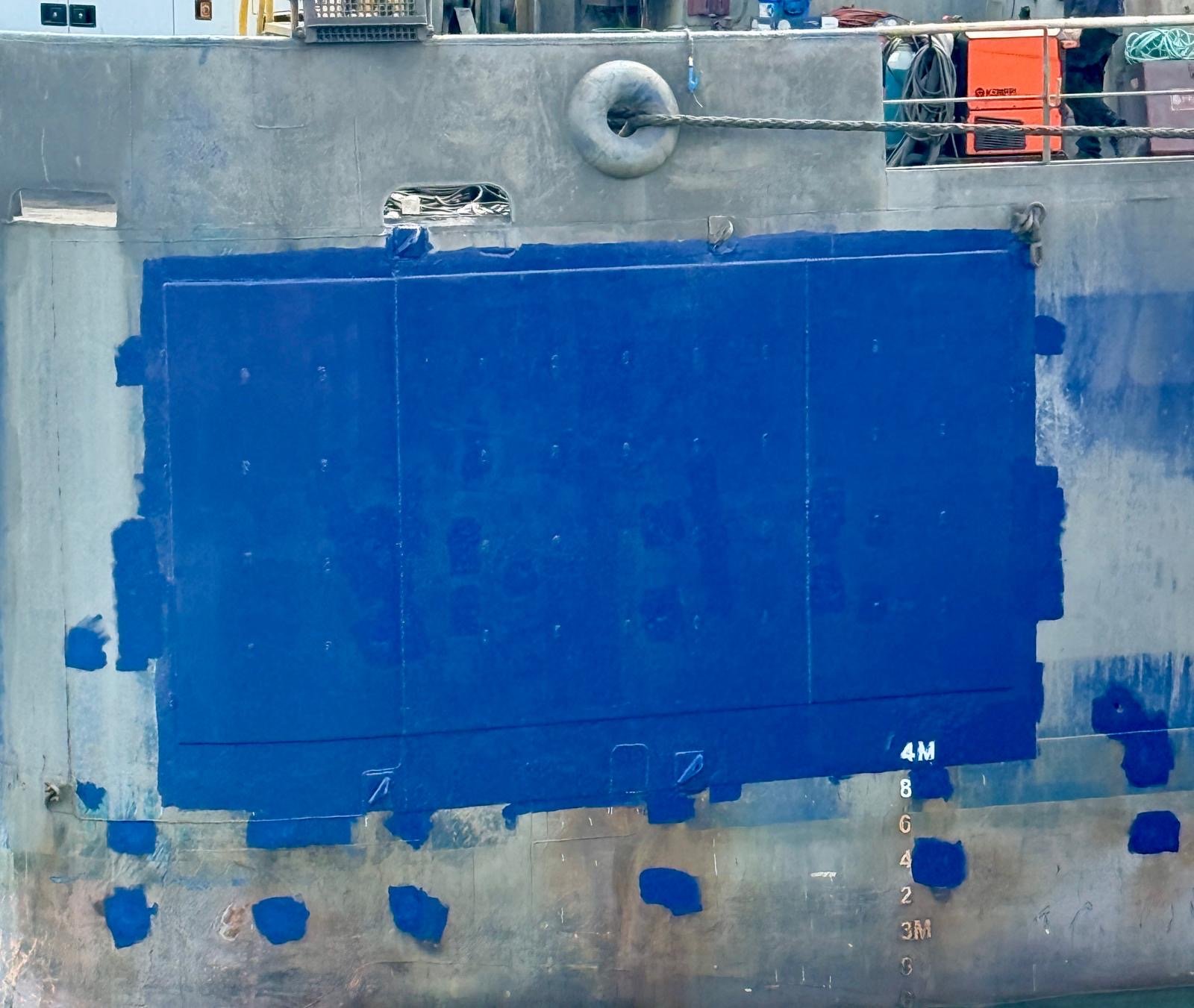
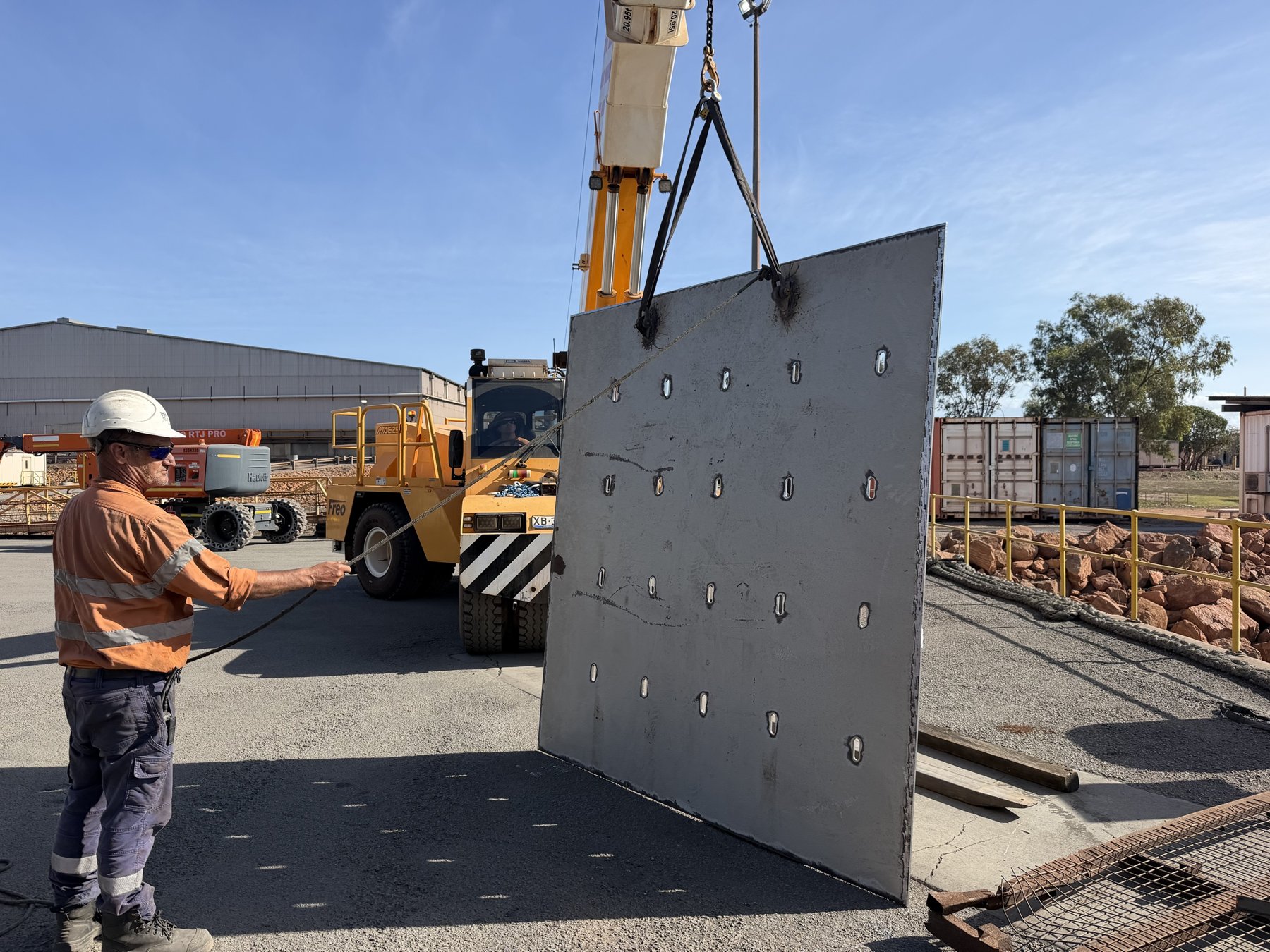
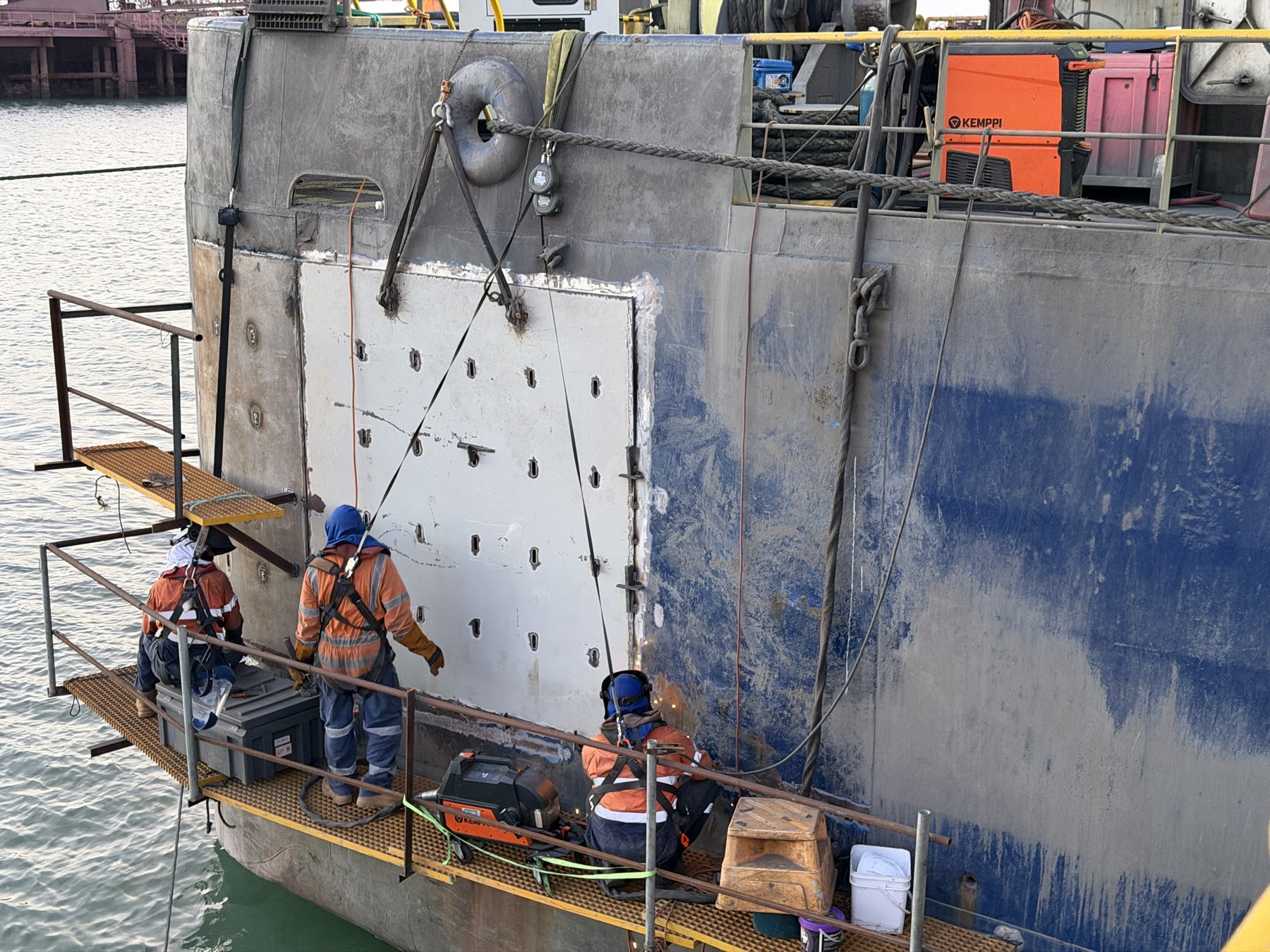
Repeated fender contact had worn the shell plating on the vessel's port quarter. Qualships fabricated and fitted three 10 mm doubler plates, each roughly 2 × 3 metres, together with new pad eyes for the fender fixings and an insert plate in an earlier doubler.
Fabrication on site
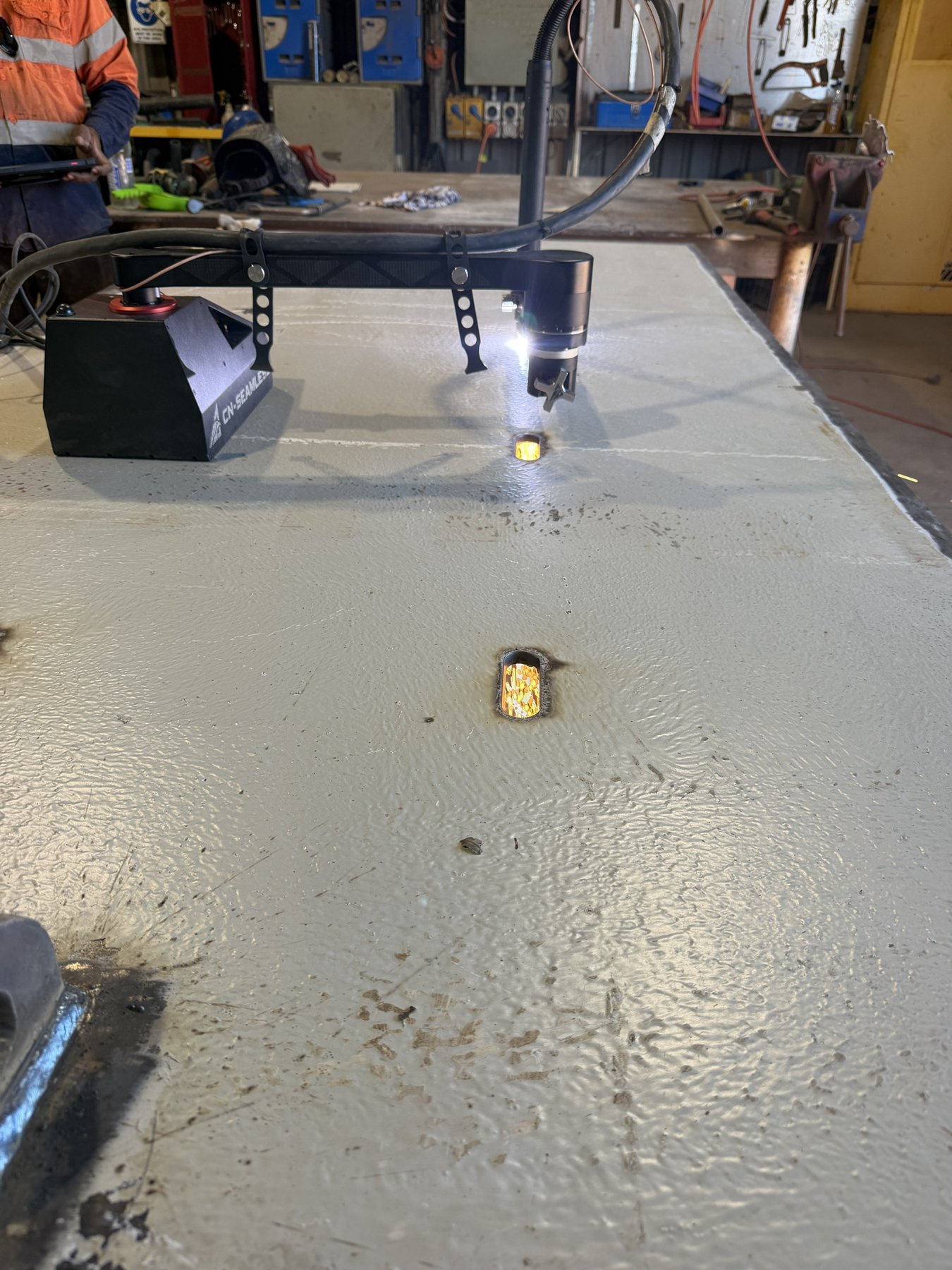
Plates were marked out and slotted on site using our portable CNC plasma cutter. Slot and perimeter welds were laid out to IACS Recommendation 47 guidance, with 20 × 100 mm slots tying each doubler to the shell so the plate cannot drum or work loose under fender impact. Pad eyes and doubler pads were cut on the same machine, so fabrication kept pace with the work on the hull.
Access over water
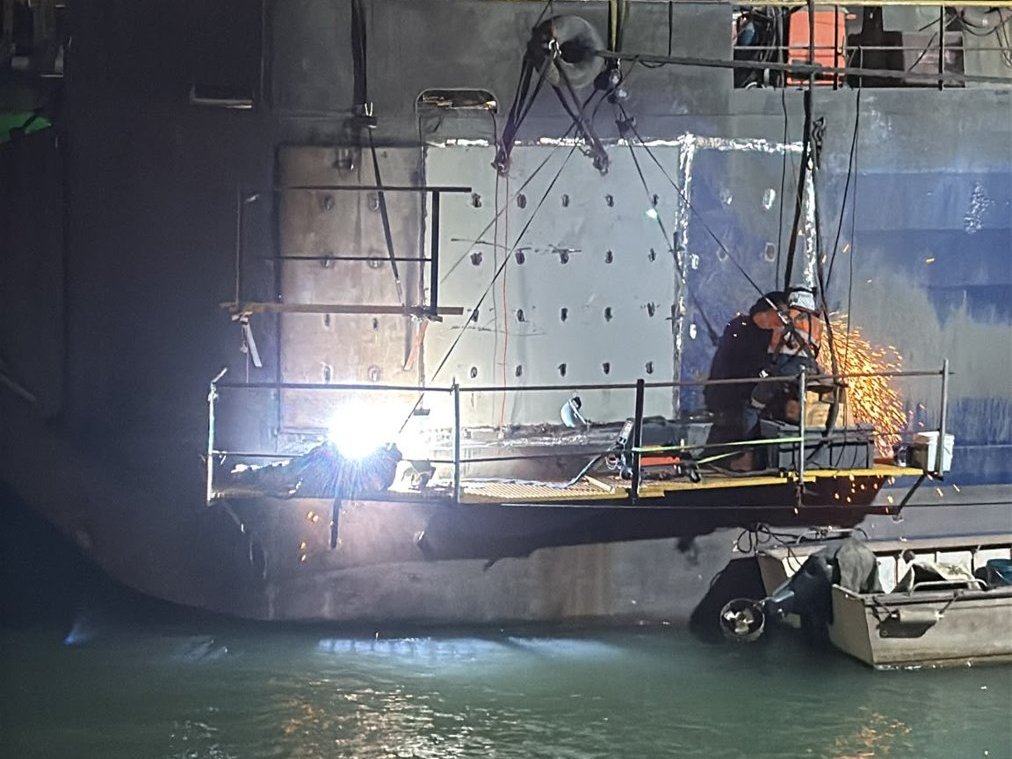
On day three the EWP could not reach the work face. Rather than wait, the team designed, fabricated and welded temporary work platforms to the shell, with a workboat for the lower edges. All personnel worked in harnesses on retractable lanyards, with life jackets on and a spotter on the wharf. The change of access cost half a day; extended working hours recovered it.
Welding and finish
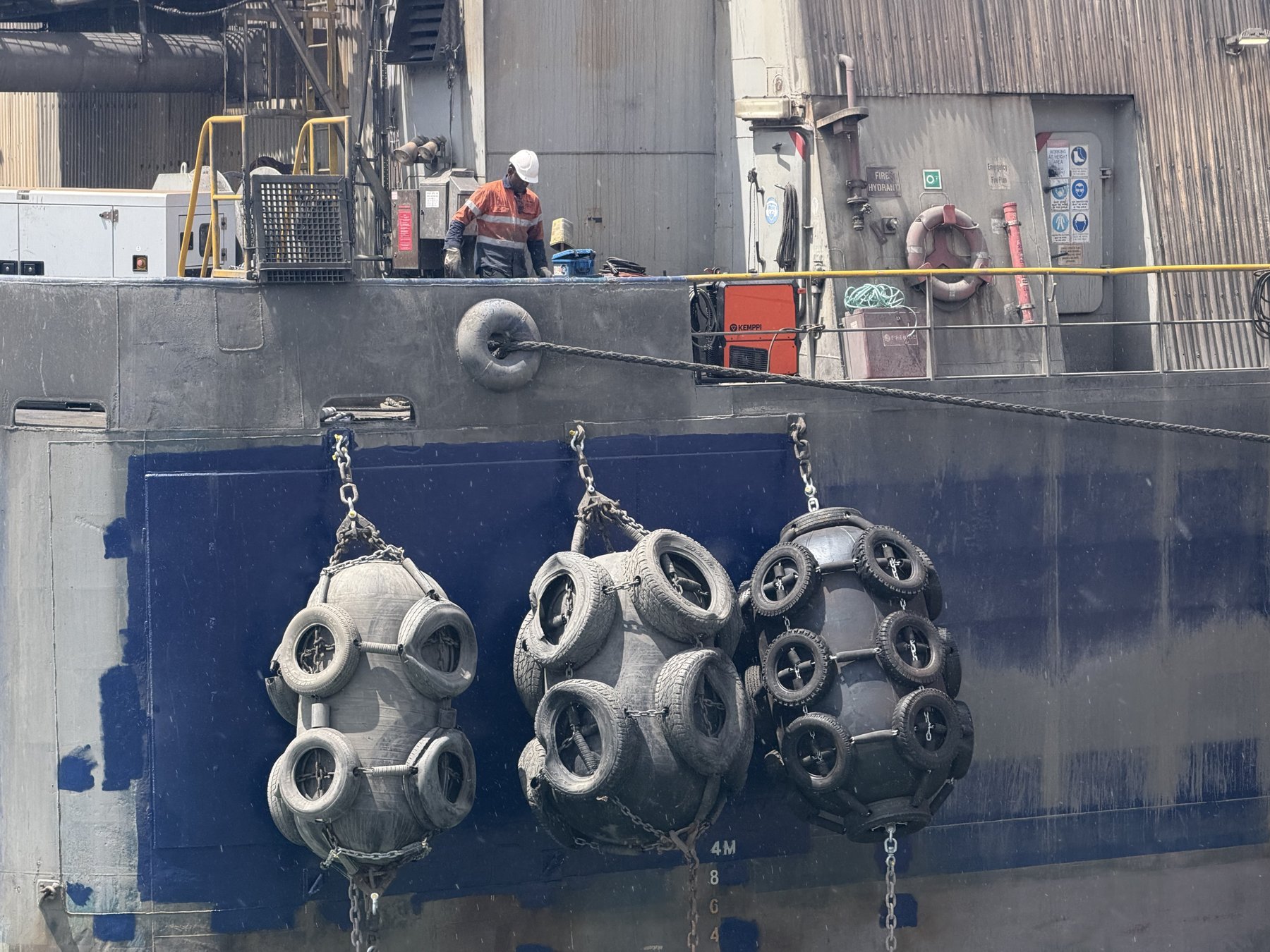
All welding was carried out to Qualships' Lloyd's Register-approved FCAW/GMAW procedures by qualified welders, including the night shifts that kept the programme on track. Welds were inspected, blended and primed, the platforms removed and attachment points dressed, and the full area topcoated to match the vessel's scheme. Fenders were refitted and the vessel returned to service.
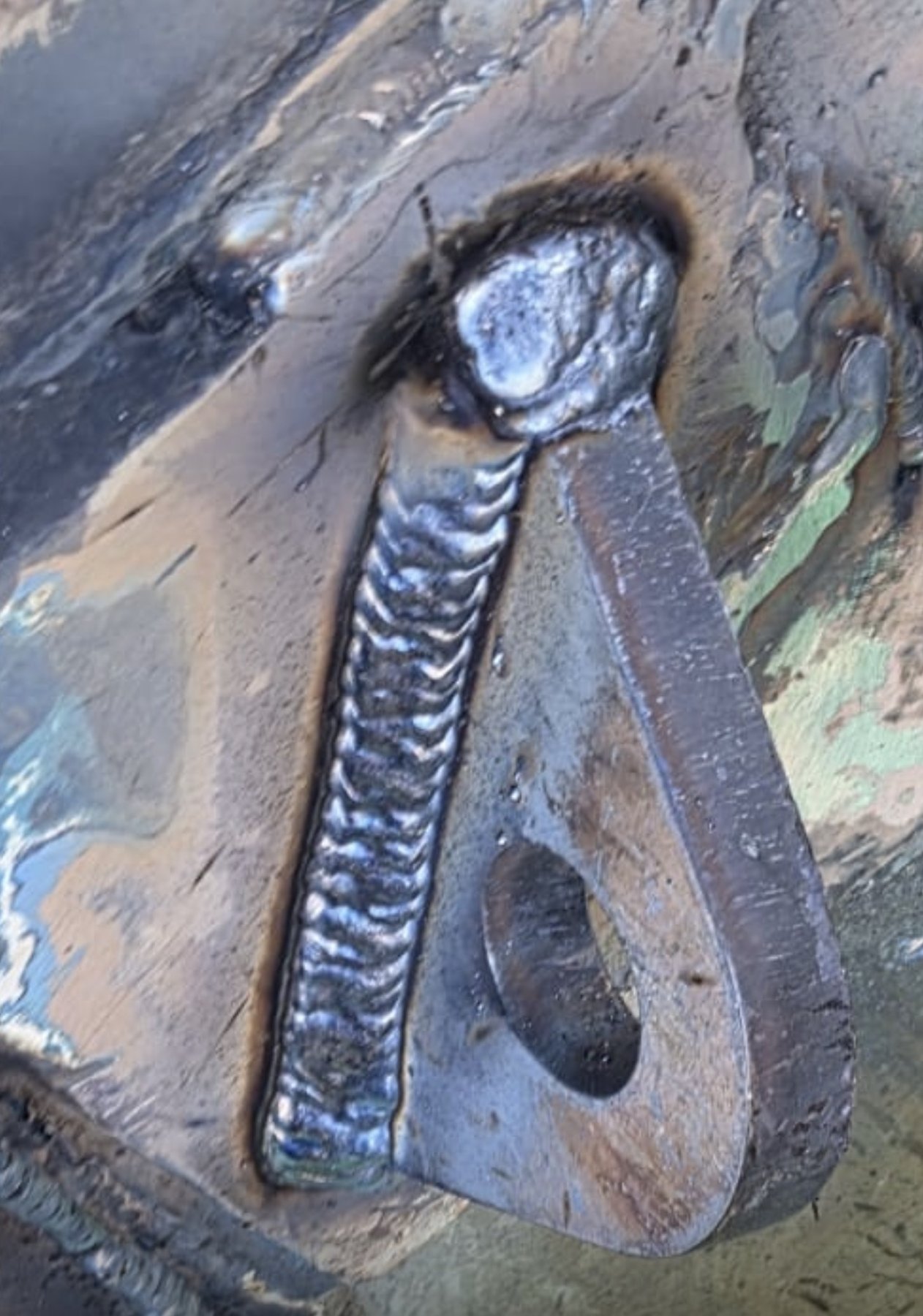
A clean fillet on a fender pad eye, laid outdoors from a platform over the water. This is the standard our welders hold whether they are in the Sydney workshop or 1,000 km from the nearest city. Fender pad eye fillet weld, Bing Bong NT
How the eight days ran
- Days 1–2Mobilise, induct, cut and prepare plates, weld pad eyes, CNC slotting.
- Day 3Vessel alongside, permits, EWP trial, platforms fabricated.
- Days 4–5Platforms erected, hull prepared, two plates fitted and welding started.
- Days 6–7Third plate fitted, all welding complete, primer and paint, platforms off.
- Day 8Finishing coats, fenders refitted, pack-up and demobilise.
Why it matters
Remote-site ship repair is about planning as much as welding. Mobilising a crew, CNC cutting gear, welding plant and rigging to a site a long way from the nearest shipyard, then changing the access method on day three without losing the schedule, is what keeps vessels trading. Thanks go to the vessel's Master, Chief Engineer and crew, whose support throughout made the job run as smoothly as it did.
In-service hull repairs, anywhere in Australia
Qualships Australia is a DNV and Lloyd's Register approved marine engineering, welding, fabrication and ship repair company, working across Australian ports and remote sites. If you have a hull repair, structural renewal or marine welding job that cannot wait for dry dock, talk to us.
Contact Qualships