Resolving Inert Gas Generator Excess Fuel Ratio Issues on Oil Chemical Tankers — A Marine Engineering Case Study
Inert Gas Generators (IGGs) are critical safety systems aboard oil chemical tankers, maintaining oxygen-depleted atmospheres in cargo tanks to prevent fire and explosion risk. When they malfunction at start-up, the consequences can extend well beyond operational downtime — including environmental violations from soot discharge overboard.
This case study documents a real-world IGG troubleshooting and rectification attendance carried out by a marine engineering service team aboard an oil chemical tanker classed with ABS.
The Problem: Excess Fuel During IGG Start-Up
During IGG start-up, an abnormal excess fuel condition in the air–fuel ratio was observed. This caused incomplete combustion and soot release into overboard water — an environmental non-conformance requiring immediate investigation and rectification.
The root cause investigation focused on three areas: fuel oil capacity valve calibration, air capacity valve calibration, and PLC commissioning data integrity.
Work Performed
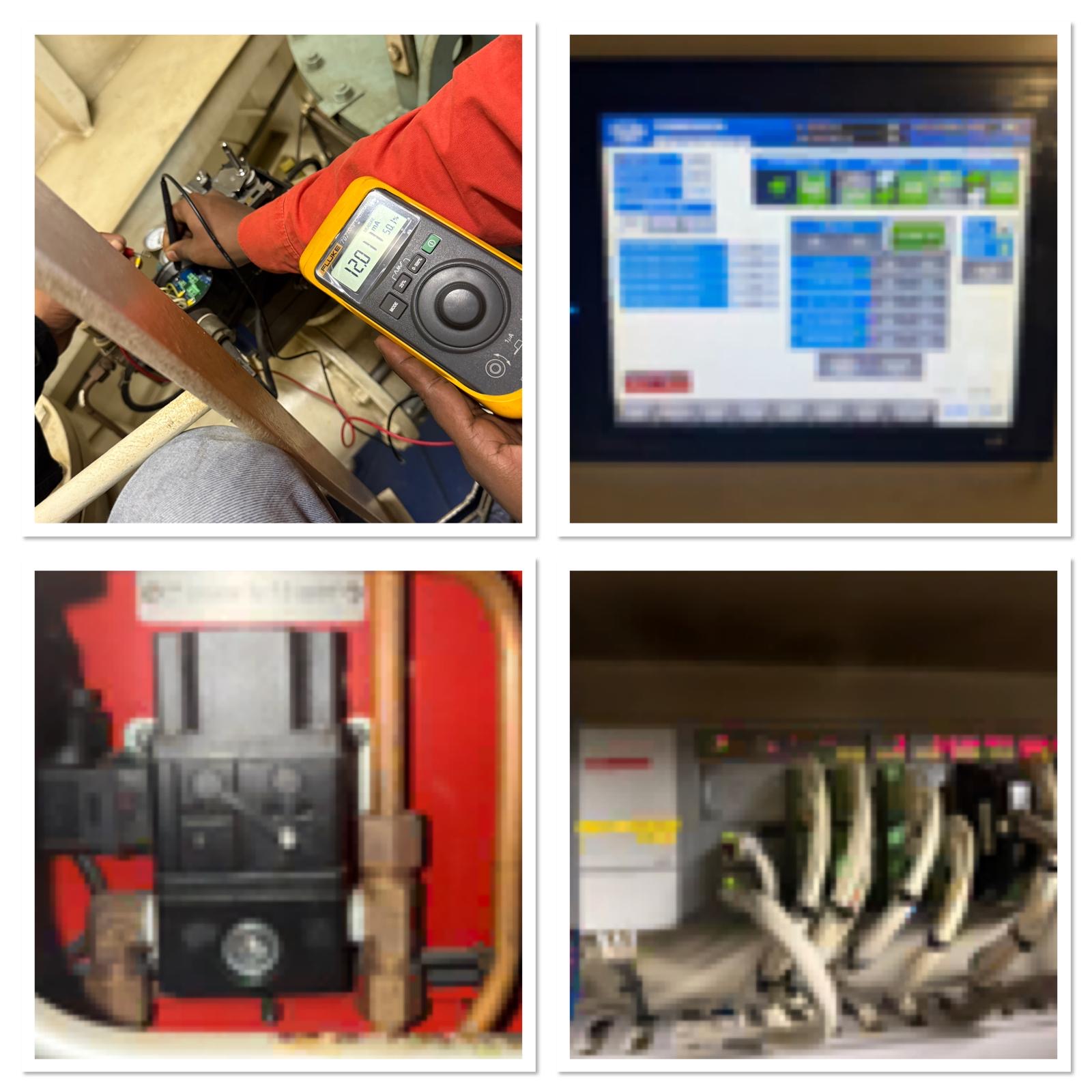
The attending engineer systematically verified IGG operating parameters against the original firing data sheet across multiple load conditions. Key actions included:
• Calibration check of fuel oil and air capacity valves — both verified satisfactory against maker specifications.
• PLC reset to clear potential parameter errors accumulated during operation.
• Insulation resistance testing of burner solenoids — wiring confirmed in good condition.
• Coordination with the original equipment manufacturer (OEM) to obtain updated, current commissioning data reflecting any post-delivery revisions.
• Upload of revised commissioning data into the IGG control panel.
• Multiple start-up trials conducted post-rectification — operation confirmed satisfactory, soot issue fully resolved.
Key Takeaway for Fleet Operators
IGG excess fuel issues are not always mechanical failures. In this case, outdated commissioning data in the PLC was the underlying cause — a subtle but critical issue that could easily be overlooked without a structured, OEM-coordinated diagnostic approach.
Regular verification of IGG commissioning data against the current OEM baseline, particularly after dry-docking or PLC maintenance, is strongly recommended as part of planned maintenance routines.
Marine engineering teams attending IGG faults should always request the latest commissioning data directly from the maker before conducting parameter uploads, as manufacturers periodically revise calibration data based on field experience.
About This Service
This attendance was carried out by a qualified marine electrical and automation engineer specialising in IGG systems, combustion controls, and PLC-based automation aboard ABS-classed oil chemical tankers operating in international trade.